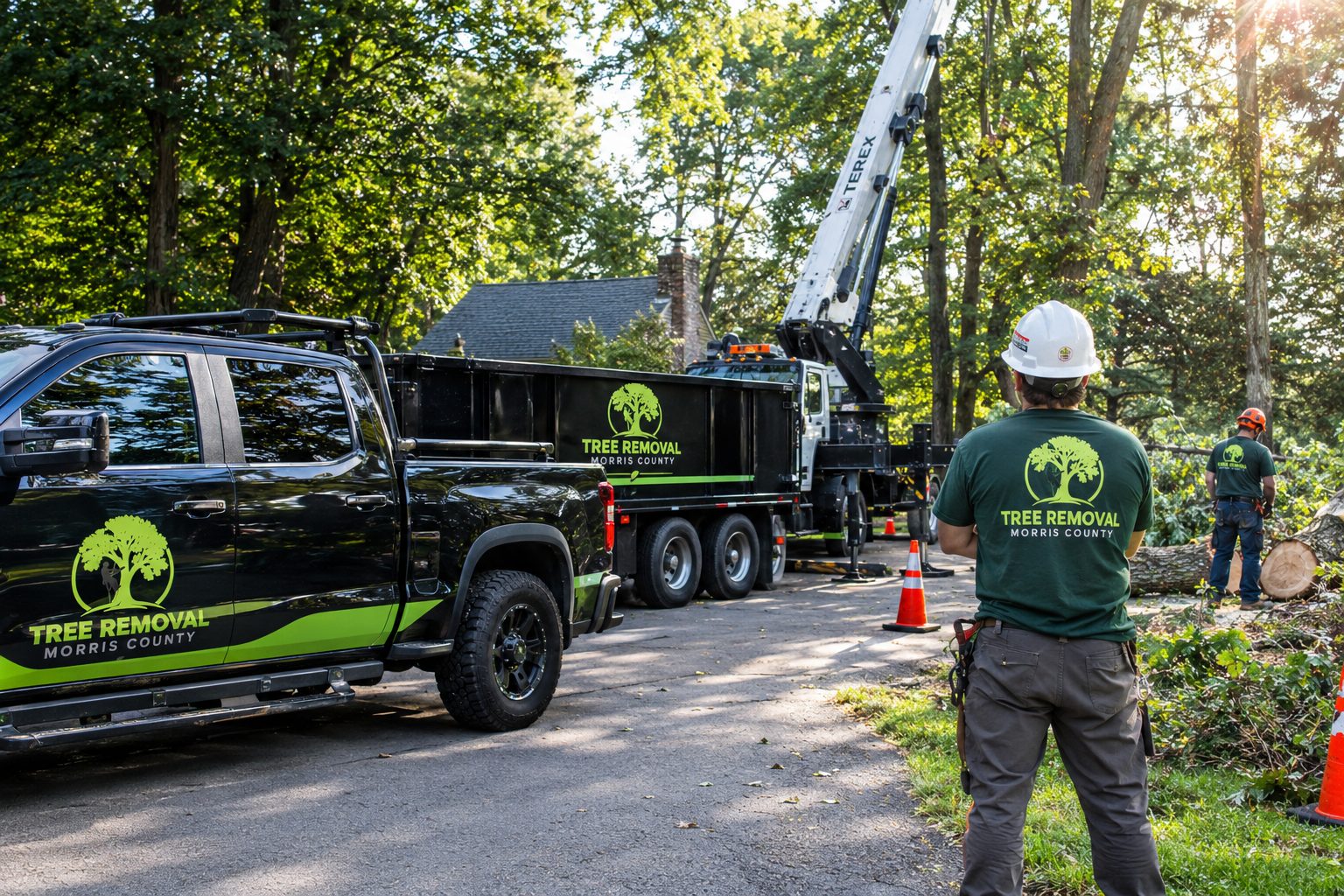
Residential Tree Removal
Professional Tree Removal in Morris County NJ
Get an on-site estimate for tree removal planned around your home, yard, access, and nearby structures. Get a Free Estimate
Residential Tree Removal
Get an on-site estimate for tree removal planned around your home, yard, access, and nearby structures. Get a Free Estimate
When a tree is dead, damaged, growing too close to a building, or no longer suitable for your property, professional removal can help address the problem. Our tree removal services NJ connect Morris County homeowners and property managers with a vetted, registered local crew that assesses each tree and chooses a removal method suited to the site. We coordinate work on individual trees as well as larger projects where several removals may be needed.
The main considerations are tree height, trunk diameter, condition, surrounding structures, ground access, and the space available for lowering branches and trunk sections. A tree in an open yard may be relatively straightforward, while a large oak between a house and a pool can require careful rigging or crane assistance. We review these details before work starts and provide an on-site estimate so you understand the expected scope and cost.
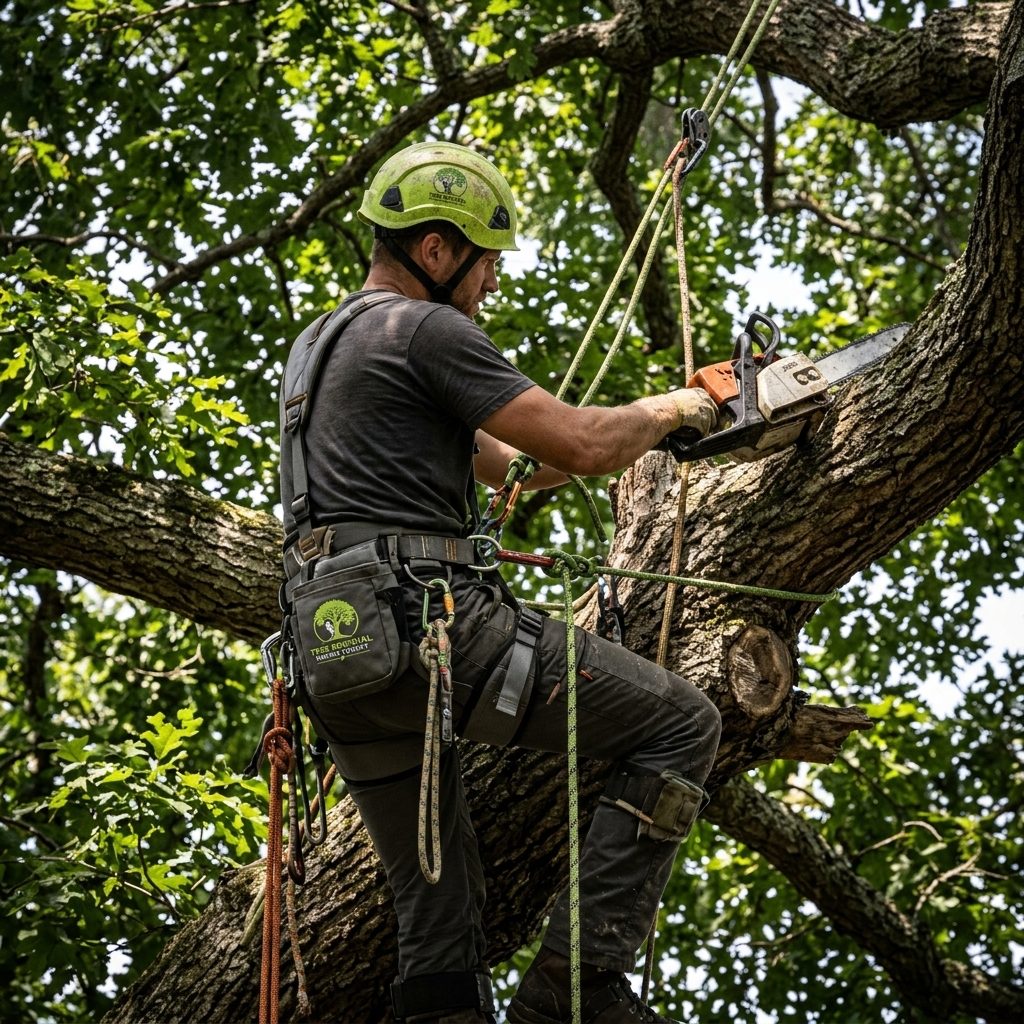
Tree removal is not a one-size-fits-all job. The method should reflect the condition of the tree, the potential fall zone, access for equipment, and the consequences of dropping wood or branches. Crane-assisted removal is a specialty for large trees in confined locations, while other trees can be removed using appropriate climbing, rigging, and ground-based methods.
Dead trees and declining trees may have weakened limbs, brittle wood, or compromised trunks. These conditions can make climbing and handling unpredictable. A site assessment helps determine whether the tree can be removed using conventional methods or whether a more controlled crane-assisted approach is appropriate.
Trees close to homes, garages, sheds, fences, and pools need a removal plan that accounts for the limited landing area. The crew evaluates available access and the safest practical way to lower or lift sections without placing surrounding property unnecessarily at risk.
Large tree removal often involves heavy trunk sections and a canopy that extends over buildings or neighboring areas. The crew considers tree structure, access, rigging options, and whether a crane can improve control over the removal process.
Crane-assisted removal is especially useful for selected large or hazardous trees in tight yards. A crane can lift cut sections over obstacles when the site supports safe setup and lifting. Crane access, ground conditions, overhead hazards, and the lifting plan all influence whether this option is appropriate.
Property managers and community associations may need removals coordinated around residents, parking, pedestrian access, and neighboring properties. We coordinate the agreed work scope with those practical considerations in mind.
| Service | Estimated Cost | Average |
|---|---|---|
| Standard tree removal | $300–$3,000 per tree | Depends on size and access |
| Hazardous or crane-assisted removal | $2,500–$5,000+ per tree | Depends on risk and equipment |
| Large dead tree near a structure | May exceed $5,000 | Requires an individual assessment |
These are typical planning ranges for New Jersey, not a quote or guaranteed price. Tree size, condition, access, obstacles, and equipment requirements affect the total. Final pricing always comes from an on-site estimate.
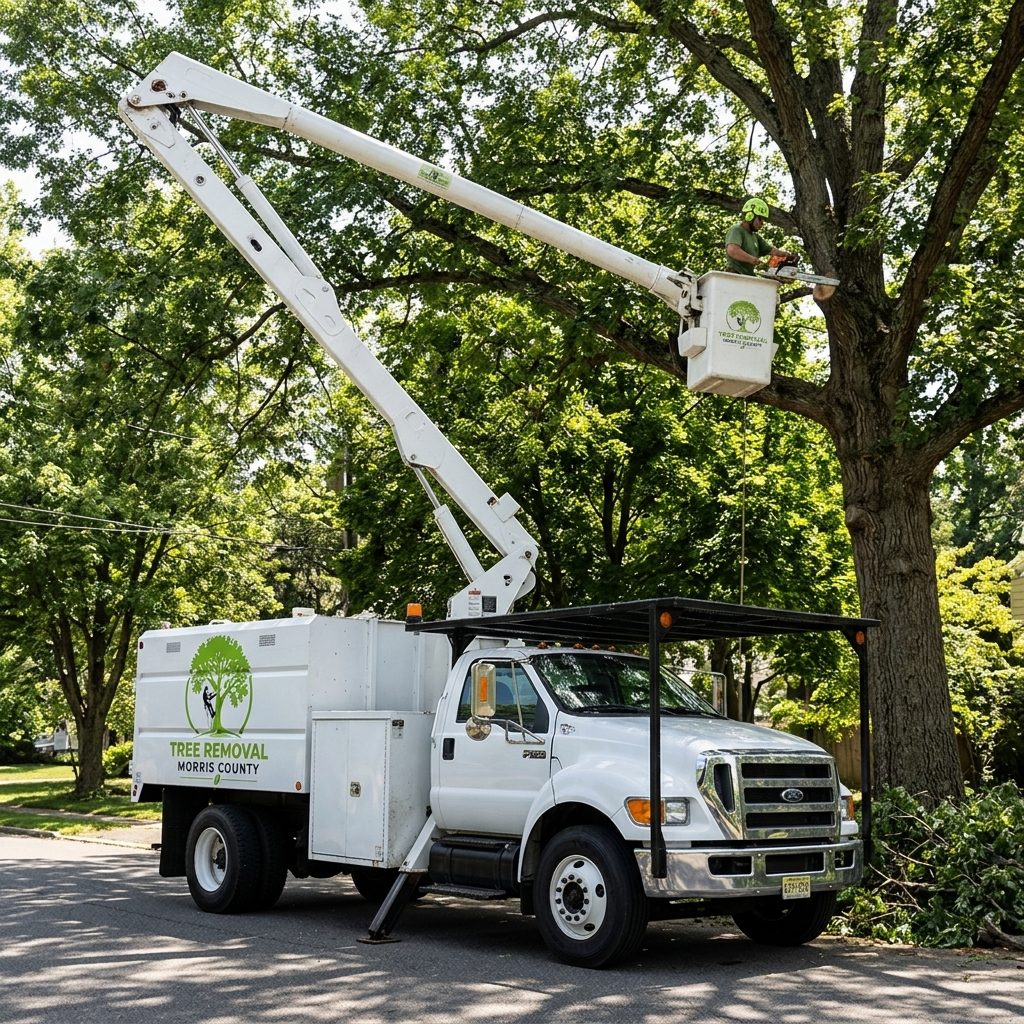
Crane assistance can be considered for large trees near buildings, pools, power lines, and tight yards when site conditions allow.
New Jersey requires tree care businesses to register with the NJ Board of Tree Experts and employ a licensed tree care operator. We prioritize working with a vetted, registered local crew.
An on-site assessment helps establish the removal approach, access needs, expected cleanup, and final estimate.
The crew considers surrounding structures, landscaping, access routes, and the available area for handling cut material.
Need a tree removed from your Morris County property? Describe the tree and request an on-site estimate.
Free — no obligations
Share the tree's location, approximate size, condition, and any nearby houses, pools, power lines, or access restrictions.
The crew reviews the tree, its condition, the surrounding area, and the equipment needed. Any apparent municipal permit requirements should be checked with the relevant town.
You receive pricing based on the actual tree and site conditions. The final price is established through this on-site estimate.
The agreed method may involve conventional removal, rigging, or crane assistance for difficult trees where the setup is suitable.
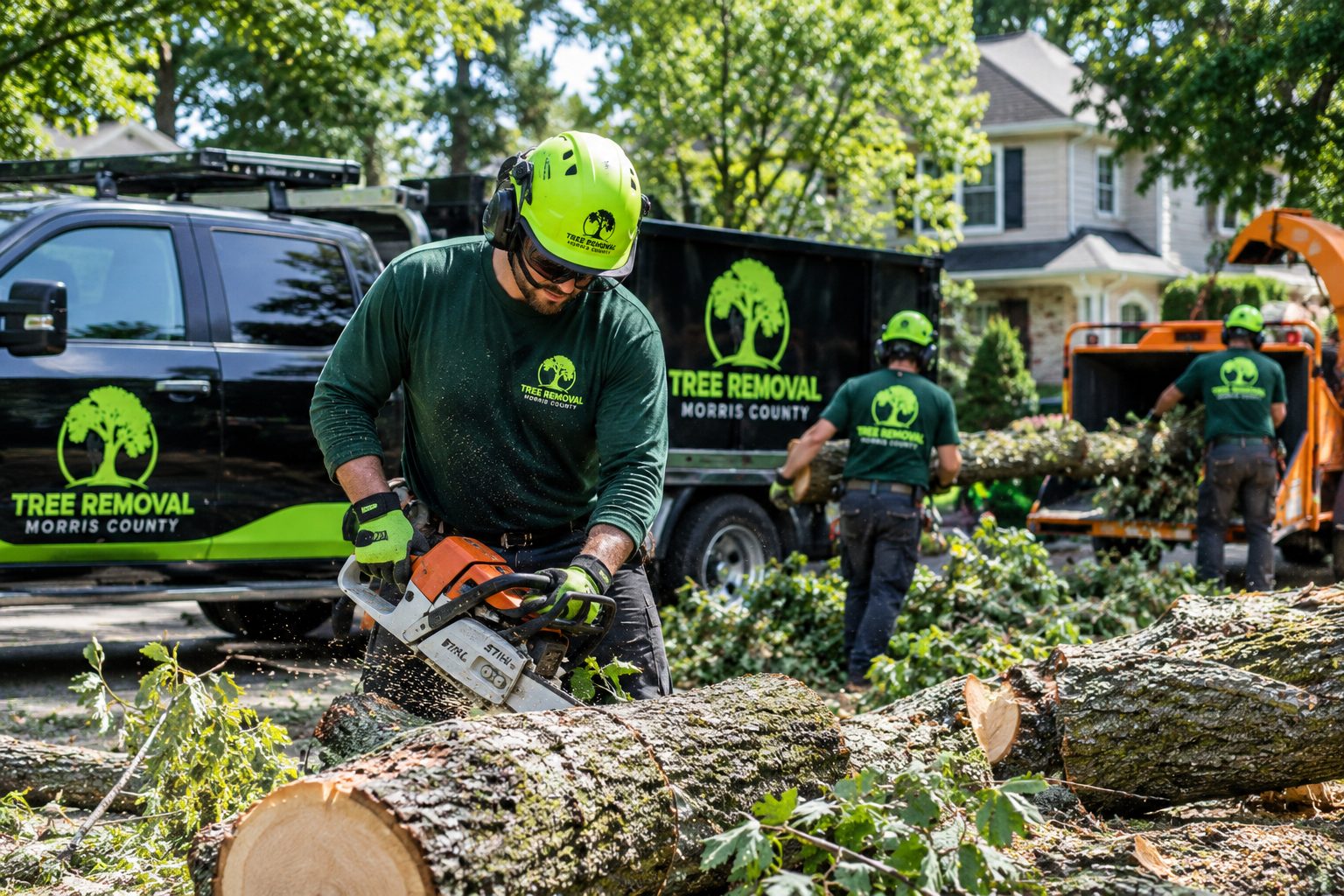
Cleanup is included in the agreed scope. Discuss how branches, trunk sections, and wood will be handled when the estimate is prepared.