Crane-Assisted Tree Removal
Crane Tree Removal NJ for Difficult Trees
Explore crane-assisted removal for large trees in tight spaces, with an on-site estimate based on your property. Get a Free Estimate
Crane-Assisted Tree Removal
Explore crane-assisted removal for large trees in tight spaces, with an on-site estimate based on your property. Get a Free Estimate
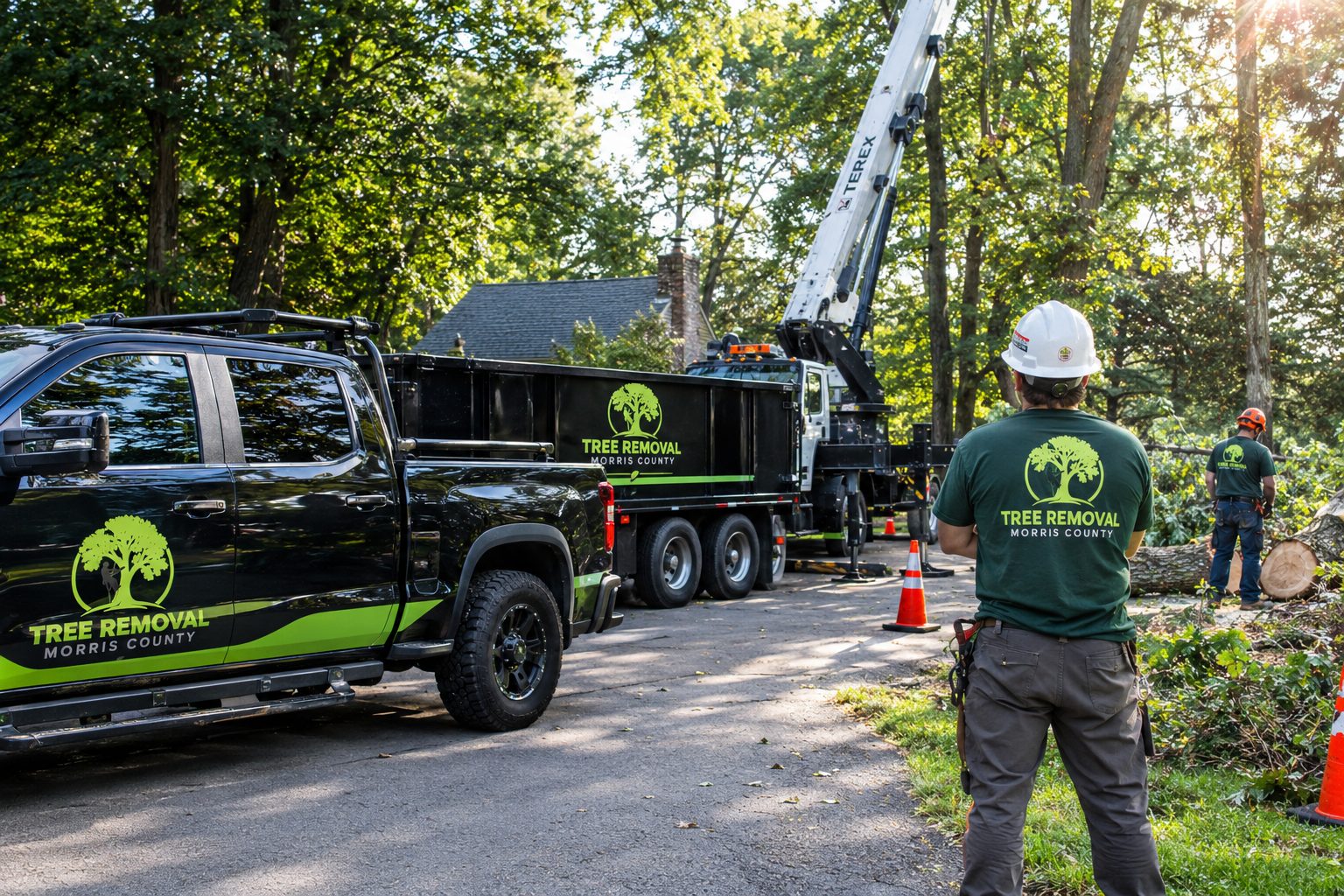
Crane tree removal NJ is a practical option when a large tree cannot be removed safely and efficiently using a conventional approach. In Morris County, mature trees often grow close to houses, garages, pools, fences, driveways, and neighboring properties. A broad canopy or limited landing area can make it difficult to lower heavy sections without a carefully planned sequence.
With crane-assisted removal, selected sections are cut and lifted by a crane so they can be moved to a suitable landing area. This can reduce the need to drop large sections through a confined yard. Crane work is not suitable for every site: the setup area, ground conditions, reach, tree condition, overhead hazards, and lifting requirements must all be assessed before the method is chosen.
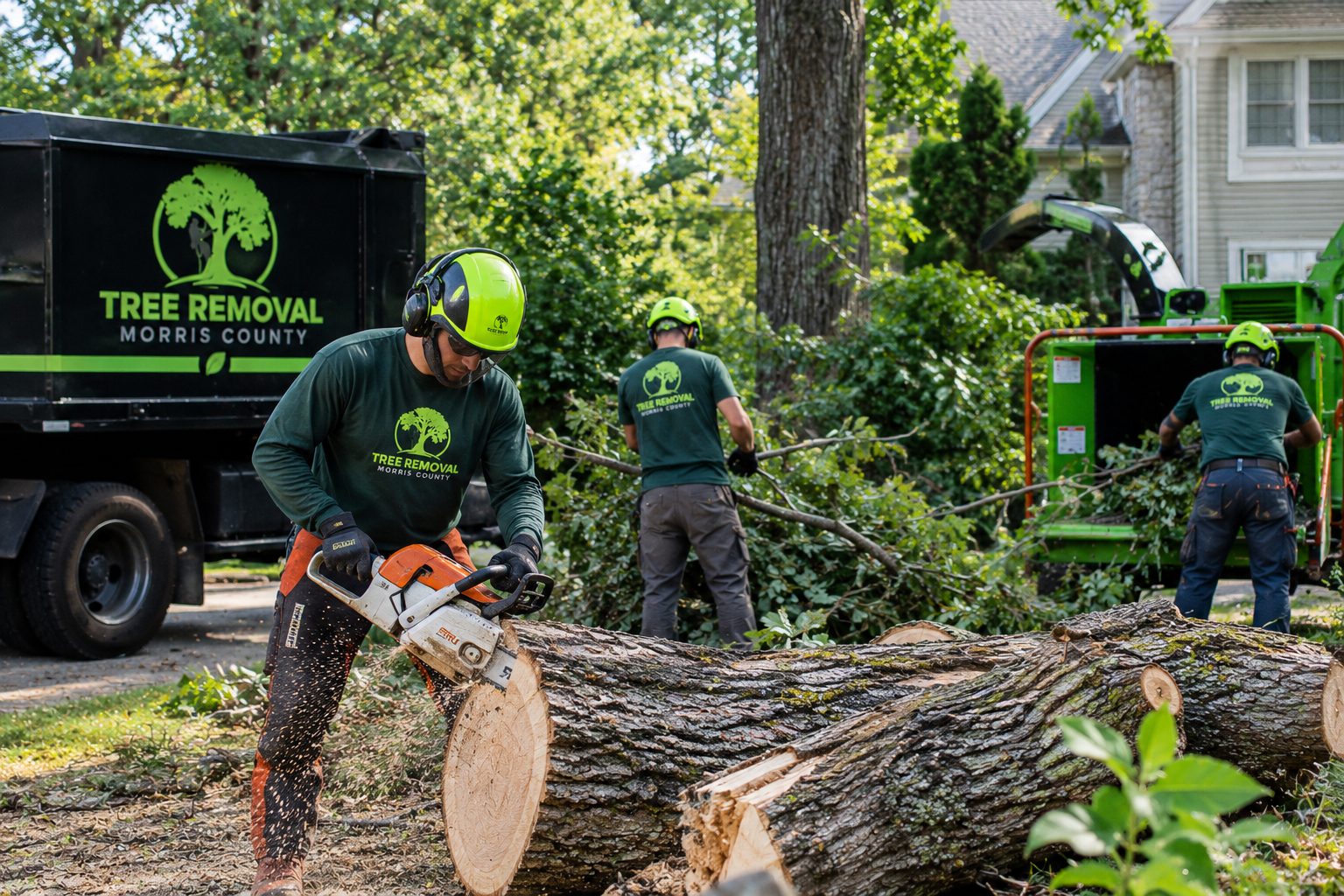
The goal is to choose a removal method that suits the tree and the property, rather than assume a crane is always necessary. An on-site assessment identifies the main constraints and whether a crane can be positioned and operated appropriately.
A mature oak or maple growing close to a home may have heavy limbs extending over the roof or toward windows and garages. Crane assistance can allow selected sections to be lifted away from the structure when the equipment can reach the tree and a suitable setup is available.
Pools, patios, fences, and landscaping can leave very little space for lowering branches. A crane may help move cut sections over these obstacles, subject to safe lifting conditions, access, and the planned landing area.
Trees close to power lines require particular care. A crane does not remove electrical hazards by itself, and work near energized lines must be coordinated with the appropriate utility and qualified personnel as required. Never approach a tree or branch touching a power line.
Large dead trees and trees with significant structural damage can be unpredictable. The crew assesses the tree's condition and determines whether crane assistance or another controlled method is appropriate.
A narrow driveway, neighboring buildings, or a small backyard can restrict equipment positioning and material handling. Crane feasibility depends on reach, setup requirements, ground conditions, and access for supporting equipment.
| Service | Estimated Cost | Average |
|---|---|---|
| Typical tree removal | $300–$3,000 per tree | Varies by size and access |
| Crane-assisted or hazardous removal | $2,500–$5,000+ per tree | Varies by crane and site needs |
| Large dead tree near structures | May exceed $5,000 | Requires an individual assessment |
These are typical New Jersey planning ranges. Crane mobilization, tree size, lifting complexity, access, hazards, and ground conditions can affect cost. Final pricing comes from an on-site estimate.
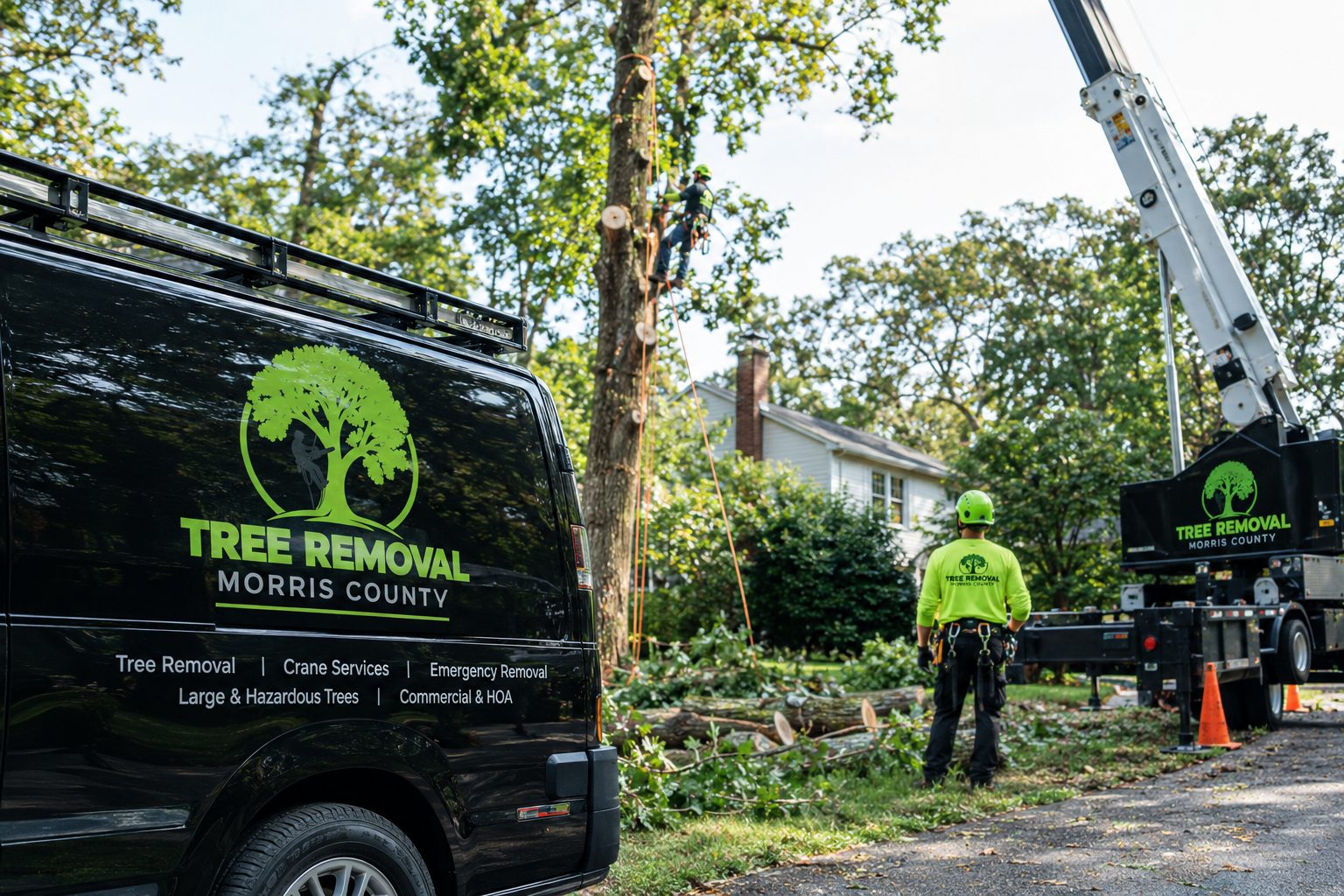
Crane-assisted removal is a central service for large trees close to buildings, pools, power lines, and tight yards.
The proposed method depends on the tree's condition, crane access, setup area, overhead hazards, and available landing space.
New Jersey requires tree care businesses to register with the NJ Board of Tree Experts and employ a licensed tree care operator.
The on-site estimate reflects the actual work and equipment requirements rather than relying on a generic price.
Have a large tree close to your home, pool, or driveway? Ask whether crane-assisted removal is suitable for your site.
Free — no obligations
Tell us about the tree's approximate height, location, condition, and proximity to buildings, pools, fences, or power lines.
The crew assesses setup space, ground conditions, reach, lifting needs, overhead hazards, and where sections can be placed.
The proposed method, expected scope, and cost are discussed before work begins. Any applicable municipal permit should be checked with the town.
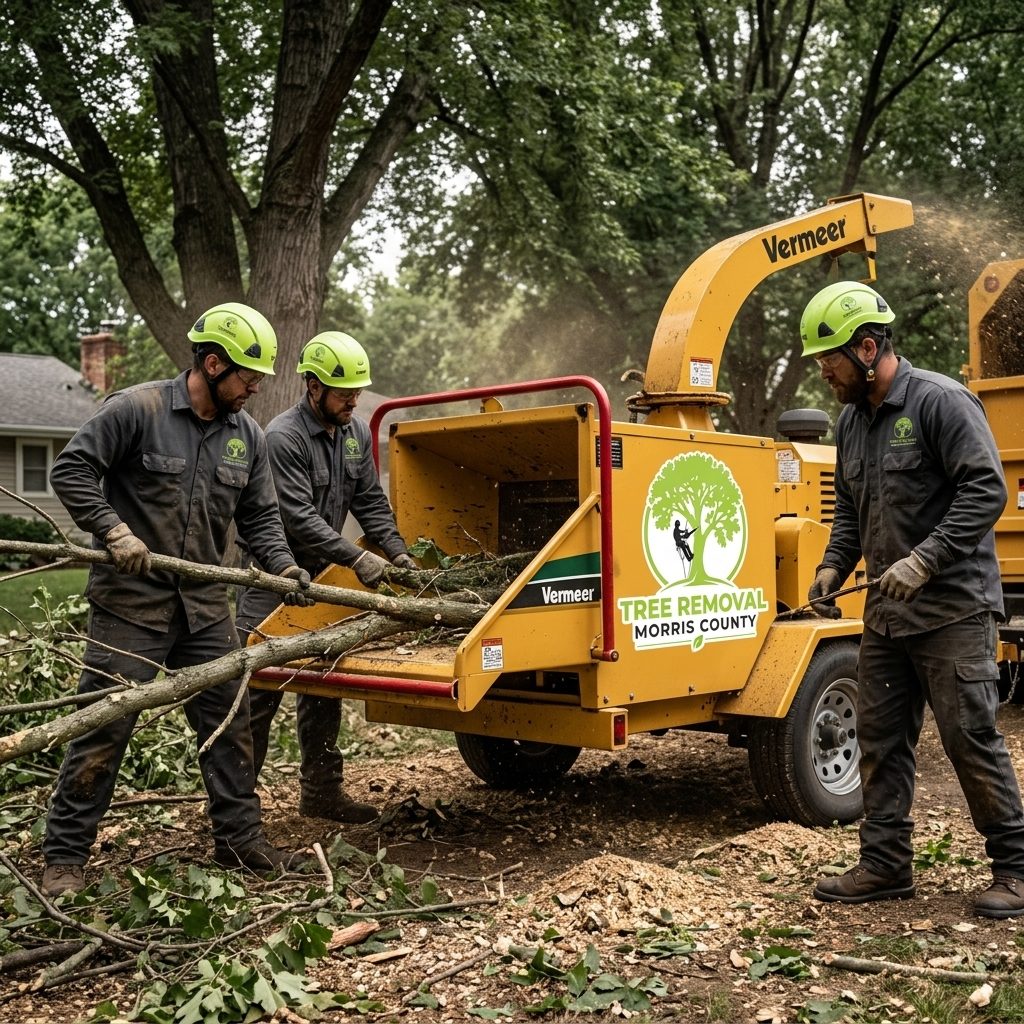
When crane assistance is suitable, the crew coordinates cutting and lifting so selected sections can be moved to a designated landing area.
Cleanup is included in the agreed scope. Material handling and any specific requests should be discussed as part of the estimate.