Emergency and Storm Damage
Emergency Tree Removal NJ in Morris County
Describe the damage and location so the removal requirements can be assessed. Stay clear of unstable trees and electrical hazards. Get a Free Estimate
Emergency and Storm Damage
Describe the damage and location so the removal requirements can be assessed. Stay clear of unstable trees and electrical hazards. Get a Free Estimate
Severe weather can split trunks, break heavy limbs, uproot trees, and leave damaged branches hanging over homes, driveways, parking areas, and neighboring properties. Emergency tree removal NJ requires careful assessment because a damaged tree may be under tension or supported by other limbs or structures. Cutting the wrong section can cause a sudden shift, so damaged trees should not be approached or handled by untrained people.
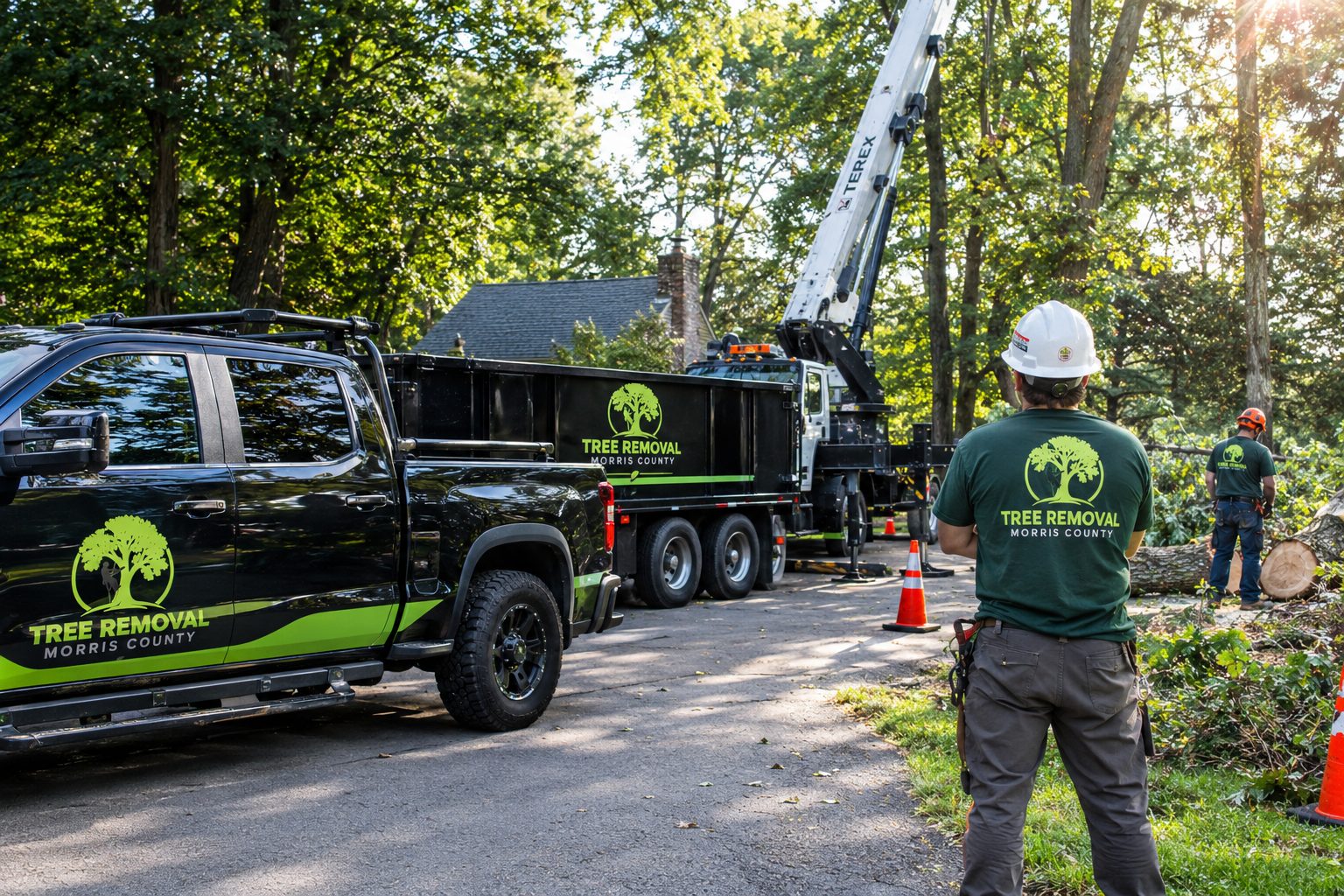
We coordinate storm damage tree removal across Morris County for residential properties, managed communities, and commercial sites. Depending on the situation, the work may involve removing a fallen tree, addressing a dangerous standing tree, or arranging crane-assisted removal for large sections near a structure. The removal method and scheduling depend on the severity of the hazard, safe access, equipment requirements, and the conditions present at the site.
Storm damage can create several different types of hazards. The right response depends on whether the tree is stable, whether a building is affected, and whether electrical or public safety risks are present.
A tree resting on a roof, garage, shed, or other structure may be supporting a dangerous load. Keep clear and avoid moving branches or sections yourself. The removal plan must account for the tree's weight, how it is supported, and the condition of the affected structure.
A split trunk or a large suspended limb may shift without warning. The crew assesses the condition and the surrounding area before deciding how to handle the damaged sections. Do not stand beneath a hanging limb or attempt to cut it down yourself.
Wind and saturated ground can loosen roots or cause a tree to lean suddenly. A partially uprooted tree can remain under considerable tension. Assessment is important before any cutting or equipment setup begins.
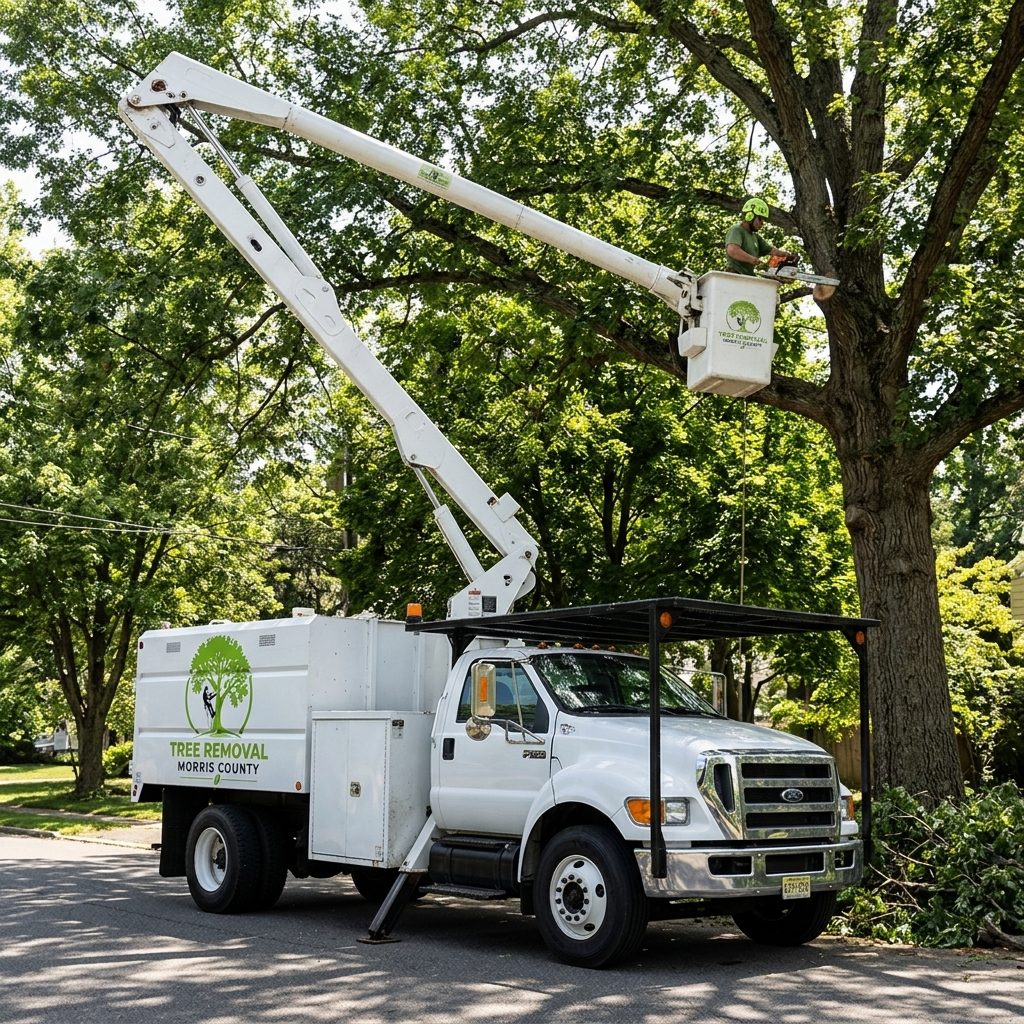
A crane may help lift damaged sections from close to houses, pools, fences, or other obstacles when the tree and site permit a safe setup. Large dead or damaged trees may require specialized planning, and costs can exceed standard tree removal prices.
Storm damage can affect community roads, parking areas, entrances, shared green spaces, and access routes. We coordinate removal needs for HOAs and property managers, with priorities determined by the hazards, access, and agreed scope.
| Service | Estimated Cost | Average |
|---|---|---|
| Standard tree removal | $300–$3,000 per tree | Depends on size and access |
| Hazardous or crane-assisted removal | $2,500–$5,000+ per tree | Depends on risk and equipment |
| Large dead tree near a structure | May exceed $5,000 | Requires an individual assessment |
These are typical New Jersey planning ranges, not emergency-service guarantees or fixed quotes. Damage severity, tree stability, equipment access, and the complexity of the removal affect cost. Final pricing comes from an on-site estimate when it is safe and practical to assess the site.
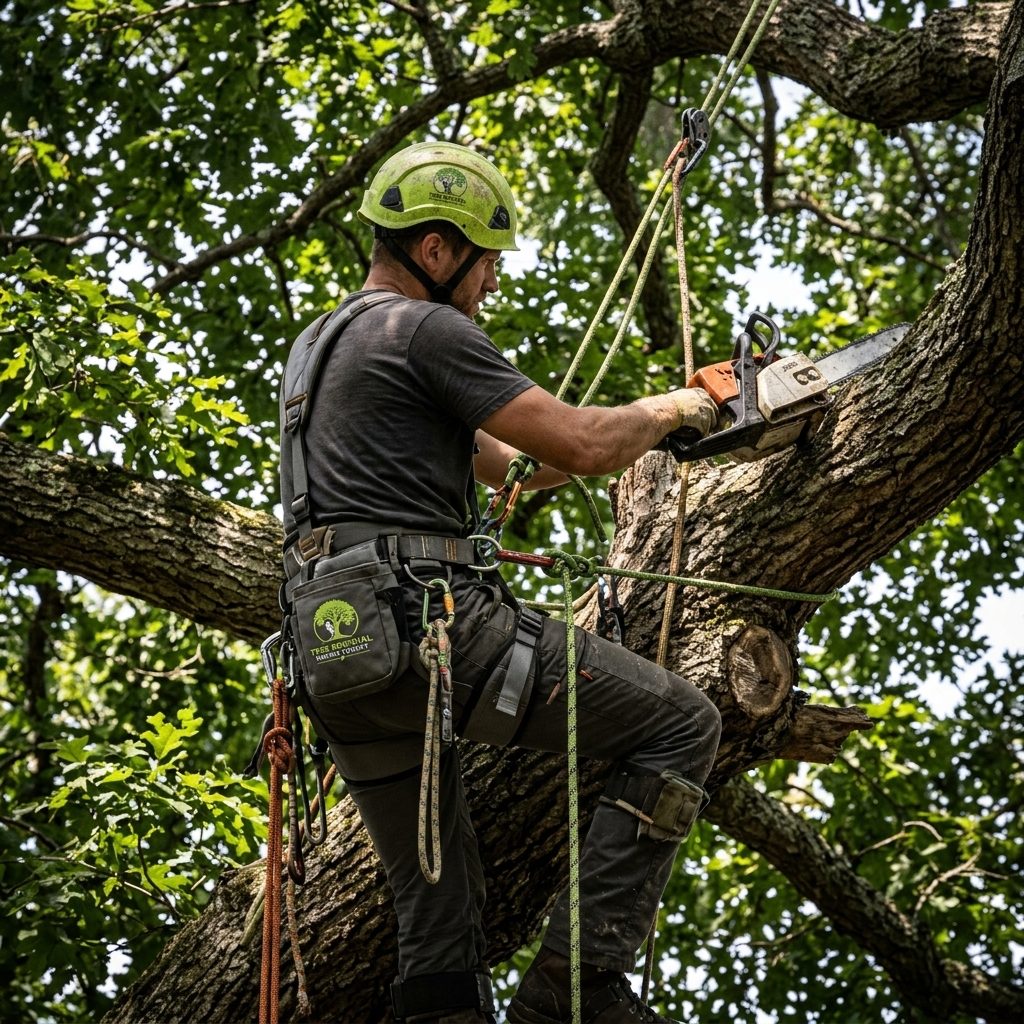
The crew considers tree stability, surrounding structures, access, and the risks created by storm damage before selecting a removal approach.
Where suitable, crane-assisted removal can help handle large sections close to homes, pools, and other obstacles.
We coordinate tree removal needs for homeowners, HOAs, and commercial property managers across Morris County.
The estimate is based on the actual damage and site conditions. Timing depends on the hazard, access, and availability of the required crew and equipment.
Have a storm-damaged tree in Morris County? Keep clear of the hazard and contact us to discuss the situation and next steps.
Free — no obligations
Stay clear of unstable trees, hanging limbs, and damaged structures. Never approach a tree or branch touching or close to a power line.
If there is an immediate threat to life, a public safety emergency, or an electrical hazard, contact the relevant emergency service or utility before arranging tree work.
When it is safe to do so, provide the property's location and explain whether the tree is standing, fallen, split, or resting on a structure.
The crew reviews the damage, access, equipment requirements, and whether crane assistance may be appropriate. Do not enter an unsafe area to obtain photographs.
The removal scope, estimate, and material handling are discussed before work begins whenever the situation permits. Cleanup is included in the agreed scope.